







Residential & Commercial Roofing Services in Pemberton, BC
Pemberton sits at the bottom of a valley shaped like a funnel. It's thirty kilometres north of Whistler, out at the end of a highway that doesn't always stay open in winter. A barn roof out in Pemberton Meadows deals with snow load completely differently than a townhouse near the village centre does. Spring runoff tests drainage in a way most BC communities never have to deal with. A roofing crew here plans around all of it before anyone touches a shingle.
A Valley Shaped Like a Funnel
The Pemberton Valley narrows as it runs from the base of Mount Meager — roughly 400 metres up — down to Lillooet Lake, about 70 kilometres away and 200 metres lower. That gradual drop concentrates runoff instead of spreading it out, which is exactly why the Pemberton Valley Dyking District exists in the first place, and why spring freshet is a real seasonal event here rather than background noise. A heavy snowpack, an early thaw, and rain landing on top of it — like what happened in 2003 — can push water levels up across the valley floor fast.
For roofs on lower-lying properties, that means drainage and gutter capacity matter just as much heading into spring as they do during winter snow loading. A poorly sloped flat roof or an undersized gutter system won't show its limits until exactly the wrong moment. Properties closer to the Lillooet River floodplain feel it most directly, but the same runoff timing affects how fast any roof in the valley needs to shed water once the thaw gets going.
From the Valley Floor to the Ridge and Snow Load Is not the Same
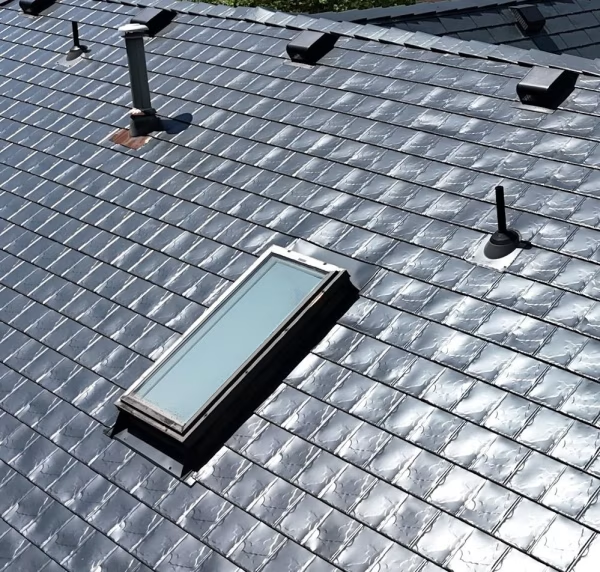
Pemberton's valley floor sits around 200 to 250 metres above sea level. The peaks surrounding it, including Mount Currie at 2,591 metres, climb well past 2,500. Properties don't need to be anywhere near that high to feel the difference a home a short drive up toward Pemberton Meadows or the benches above the valley can carry a meaningfully heavier snow load than one closer to the village centre, and older roofs built before current snow load requirements were common sometimes weren't engineered for what they're now expected to hold. Metal roofing sheds accumulated snow more effectively than asphalt shingles on steeper pitches, which is part of why it shows up so often on both farm buildings and newer homes in this area.
One Highway In, One Highway Out
Highway 99 through the Duffey Lake corridor is Pemberton's main connection north, and it closes for avalanche control often enough that it's a real planning factor, not a hypothetical one. A roofing project scheduled around a delivery that can't get through, or an emergency roof repair call that has to wait out a highway closure, isn't unusual here the way it would be in a Lower Mainland city with three or four routes to choose from. Material quantities get calculated with less room for guesswork, and a crew plans to be self-sufficient on-site rather than counting on a same-day supply run.
Seed Potatoes, Barns, and a Working Valley Floor
The Pemberton Valley has grown seed potatoes for generations, a crop the region is genuinely known for across BC, and the surrounding Agricultural Land Reserve still supports working farms alongside newer berry and flower operations. Barns, equipment sheds, and storage buildings on these properties often span wider, uninterrupted roof areas than a house does, and many were built or re-roofed in stages over decades rather than to a single spec. Commercial roofing and low-slope systems suited to agricultural buildings need to account for that mixed history, and roof inspections on these structures usually turn up more than one roofing generation layered on top of the original deck.
Whistler's Overflow and the Cabins Further Up the Valley
Its population has grown as a bedroom community for Whistler, with residents commuting down Highway 99 to work rather than residing there, and BC Transit's Route 99 bus now runs along the same route daily. Newer residential roofing construction has been added to an existing housing stock that still contains older character homes and recreational cabins that sit empty for extended periods of time near D'Arcy and the lakes. A cabin left unchecked over a snow-heavy winter can develop ice dams along the eaves that force water back under the shingles, and nobody's there to catch the resulting leak until the next visit. The maintenance of a seasonal property here is less about convenience and more about preventing damage from compounding while no one is watching, and finding a small leak in the spring is far less costly than finding the same leak later in the season.
What a Pemberton Winter Actually Tests
Freeze-thaw cycling is more pronounced in Pemberton than in coastal Metro Vancouver, since the valley's transitional climate pulls in both moist coastal air and colder interior temperature swings. That cycling stresses flashing and sealant faster than a purely coastal winter would, and proper attic and roof ventilation becomes what actually prevents ice damming, not just insulation alone. Summer brings the opposite problem: long stretches of high-UV, dry heat that accelerate shingle aging on south-facing slopes with no tree cover. A roof replacement decision here often comes down to which of those two seasonal extremes did more damage, not just the roof's age on paper.
Frequently Asked Questions
Why does spring cause more roofing concerns in Pemberton than winter snow does?
Rapid snowmelt combined with rain can raise water levels across the valley quickly, and a roof's drainage and gutter capacity gets tested by that runoff as much as by the snow load itself.
Does a highway closure actually affect roof repair timelines here?
It can. Highway 99 closes for avalanche control with enough regularity that material delivery and emergency response both get planned with that possibility in mind, not treated as a rare exception.
Are farm buildings inspected differently than houses?
Yes, of course. Barns and equipment buildings often have wider roof spans and multiple past repair layers, so an inspection typically covers more ground and more roofing generations than a single-family home would.
Is metal roofing worth it for a Pemberton property?
For anywhere carrying a heavier snow load, often yes. Metal sheds accumulated snow more effectively than asphalt shingles, which matters more here than in flatter, lower-snowfall parts of the Sea to Sky corridor.
How often should a recreational cabin near D'Arcy or the lakes be checked?
At least once before winter and once after, since ice damming and undetected leaks are the most common issues on properties that sit empty for weeks or months at a time.
Get a Roof Assessment for Your Pemberton Property
GV Roofs is WorkSafeBC compliant, carries liability insurance, and holds CertainTeed SELECT ShingleMaster™ certification on qualifying installations. Whether it is a farm building in Pemberton Meadows, a commuter home near the village, or a cabin further up the valley, contact GV Roofs to schedule an inspection or consultation for your property.

 5.0
5.0
 5.0
5.0
 5.0
5.0
 5.0
5.0
 4.7
4.7