


Picking a Low-Slope Roof System for a Vancouver Commercial Building
04, Sep 2026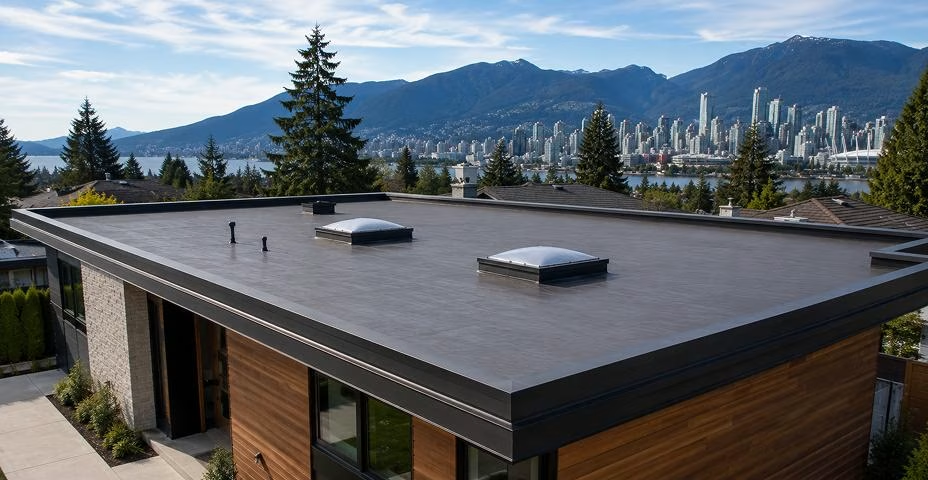
A low-slope commercial roof in Vancouver faces frequent rainfall and prolonged moisture exposure. That makes drainage and membrane selection especially important. Property owners often start by comparing material prices, but installation quality and drainage design carry equal weight. That's why the right choice usually starts with a roof inspection alongside an experienced low-slope roofing contractor in Vancouver. This post explains how to choose the right low-slope roof system for a commercial building in Vancouver.
What Is a Low-Slope Commercial Roof?
A low-slope roof is not completely level. It has a slight, engineered fall toward drains, scuppers or gutters so that rainwater runs off rather than sitting on the membrane. You don't normally see this fall from the ground. That is why "flat roof" gets used loosely for what is technically a low-slope assembly.
Continuous ponding adds load and can eventually cause membrane deterioration and other roof problems. Where a steeper-pitched roof depends mainly on gravity, flat and low-slope roofing systems depend on the membrane and the drainage design working together. A low-slope roofing contractor that Vancouver property owners have come to count on can check the drainage and suggest the appropriate system.
Best Low-Slope Roofing Systems for Commercial Buildings
No single system suits every commercial building. The right choice depends on the existing structure, building use, exposure, drainage layout and budget. Common low-slope roof systems for commercial roofs in the Lower Mainland include torch-on/SBS, TPO, EPDM and roof coatings.
| System | Main Advantage | Main Consideration |
|---|---|---|
| Torch-on/SBS | Durable, multi-layer, reinforced membrane | Requires heat/open-flame installation and trained crews |
| TPO | Reflective surface, heat-welded seams | Performance depends on seam and detailing quality |
| EPDM | Flexible rubber membrane, handles temperature swings | Adhered seams need ongoing flashing attention |
| Roof coating | Extends life of a sound existing roof | Not suitable over a deteriorated or failed membrane |
Torch-On SBS Roofing for Low-Slope Commercial Roofs
Torch-on low-slope roofing is made from modified bitumen sheets, applied in layers and heated until they fuse. The torch-on/SBS roofing system produces a thick, reinforced membrane with a long history on commercial buildings, especially where there is regular foot traffic or rooftop equipment.
When correctly executed, seams are heat-welded to create a seamless waterproof membrane. Torch application also requires trained installers and site safety controls, since it involves an open flame close to the building envelope. Whether it fits a given roof depends on the deck, the insulation under it, and whether open-flame work is appropriate there. A qualified low-slope roofing contractor in Vancouver can perform torch-on SBS installation, inspection and ongoing maintenance.
TPO vs. EPDM Roofing for Commercial Buildings
TPO and EPDM are both single-ply membranes, but they aren't interchangeable. In Vancouver, TPO installers typically supply a reflective sheet with seams heat-welded by hot air. It suits larger commercial roofs where reflectivity and installation speed matter, though performance depends heavily on seam quality and penetration detailing.
An EPDM low-slope roof uses a synthetic rubber membrane valued for flexibility across temperature swings. Its seams are typically adhered rather than welded, so flashing maintenance deserves attention over time. It can suit roofs with irregular shapes or many penetrations, though the actual fit depends on the roof's design, detailing and the installing contractor's experience with the system, not the shape alone. Reviewing EPDM roofing systems against your building's layout helps clarify whether it fits better than TPO.
When Are Roof Coatings Suitable for Low-Slope Roofs?
A roof coating is not automatically equivalent to a new membrane. Coatings work best over a substrate that's fundamentally sound (no active leaks, no saturated insulation, no structural concerns), where the goal is extending service life or addressing surface wear. They're not enough where a roof has repeated leaks, a failed membrane, wet insulation or structural issues. In those cases, roof coatings and waterproofing have to be weighed against partial or full replacement.
How to Choose a Low-Slope Roofing Contractor in Vancouver
Years in business alone don't confirm a contractor understands low-slope systems. Look for a low-slope roofing contractor that Vancouver property managers can verify: one with relevant commercial experience, who inspects the roof and assesses drainage before recommending a system, and who provides a written scope naming the specific membrane rather than describing it generically. Ask how they handle warranties, site safety and maintenance. References say more than a sales pitch. Installation quality often matters as much as the membrane specified, since even a well-regarded system fails early when installed poorly.
Why Choose GoodVans Roofing for Low-Slope Roofing in Vancouver?
GoodVans Roofing is a premier roofing company in Vancouver. We work on commercial low-slope roofing across Vancouver, including torch-on/SBS, TPO, and EPDM installations. We also provide roof coatings and waterproofing without a full replacement. Assessment starts with the existing roof and drainage rather than a preselected system. Our team knows the right membrane depends on what's already there: deck condition, insulation, exposure, and building use. Ask about specific completed projects, warranty terms, and manufacturer credentials for your building type when you request a quote.
Frequently Asked Questions
1. What is the best low-slope roofing system for Vancouver?
No single system is best for every Vancouver commercial roof. The right choice depends on the existing roof condition, drainage, budget and expected service life. Torch-on, TPO, EPDM and coatings each suit different circumstances, so the decision follows the roof, not the other way round.
2. How long do low-slope commercial roofs last?
Service life varies by roofing system, installation quality, climate exposure, maintenance and existing roof conditions. A figure given without those factors is an approximation, not a guarantee.
3. What's the difference between low-slope and flat roofing?
"Flat roofing" is the common term for roofs that appear level from the ground. Low-slope roofing technically has a designed fall built in to move water toward drains. True zero-slope roofs are uncommon commercially because they trap water.
If your building's low-slope roof needs an assessment, repair or replacement, GoodVans Roofing can review the existing roof and drainage and talk through which system fits your situation.