




Some Vancouver Stratas Are Trading Cedar Shakes for Metal Roofs. Here Is Why
07, Oct 2026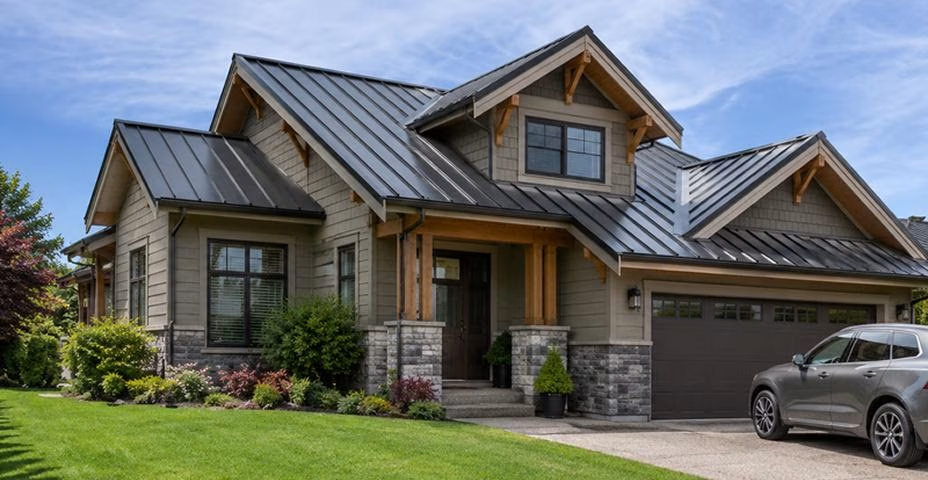
Metal is getting a second look from strata councils because it can offer a longer service life, fewer routine repairs, and better fire resistance than another round of cedar shakes. That does not make it automatic. A metal roofing contractor in Vancouver BC still has to weigh the deck condition, fire rating and budget before recommending it. For older Metro Vancouver condos and townhouses staring down another cedar replacement, that comparison is worth making properly.
Why Some Multi-Unit Roofs Move Away From Cedar
A strata usually revisits its roofing material when the current cedar shake roofing system nears the end of its service life. Cedar can perform well for decades, but Vancouver's damp climate accelerates moss growth, and moss holds moisture against the shakes long after a storm has passed. That moisture can contribute to more frequent maintenance and repair needs over time.
Age is also a factor. A shake roof that has been patched a few times usually ends up needing patching more, not less. Some buildings have fire-resistance requirements that matter, depending on assembly and code. All this doesn’t make cedar a bad material. It depends on the roof itself, its maintenance history, and what the building’s insurer or bylaws require.
What changes the conversation is TCO (total cost of ownership). When weighing one more cedar replacement against a longer-lived option, a strata should be pricing out the life of the roof, not just the next project.
What Metal Makes a Building Over the Long Term
For some strata buildings, metal roofing is being considered as a long-term maintenance decision. Although the initial cost can be higher, its potential service life may reduce the need for frequent full roof replacements.
Lifespan and Low Upkeep
Metal roof lifespan depends on the metal, the coating, installation quality and exposure to wind, salt air and debris. The quality of metal roof installation projects in Vancouver can also affect how well the system performs over time. Many systems are designed for a service life well beyond a typical cedar or asphalt roof, although the exact number should be taken from the product’s own manufacturer specification.
Durability is not the same as being maintenance-free. Fasteners, flashings, penetrations and drainage details are still subject to periodic checks, because that's where a metal roof can fail.
Fire & Moss Resistance
Metal roofing itself is generally non-combustible, but what an insurer or code official will be looking for is the fire rating of the entire assembly, not just the panel.
Moss is a climate issue, not just a cedar issue. Metal has a smoother surface than a textured shake, so moss has less to grip, which can reduce some maintenance issues. A metal roofing contractor in Vancouver BC can also assess the roof design, drainage, nearby trees and debris exposure when planning a suitable metal roofing system. There are no guarantees, as these factors still play a role in how much organic growth a roof will have over time.
Is Metal the Right Material for Your Building?
There is no single answer for every strata building. Before choosing a condominium roofing system, work through these questions:
- What is the current status of the deck?
- How old is the current cedar system? How many repairs has it had?
- What fire rating does the building require?
- What metal profile suits the roof’s pitch and design?
- What is the warranty on the material and the installation separately?
- Do you need to upgrade the building for ventilation or drainage first?
- What are the total project costs, not just the material costs?
- What disruption will the residents experience during the work?
Condominium and townhouse complex roofing projects answer each of these differently based on layout and access.
Why pick GoodVans Roofing for strata roofing?
GoodVans Roofing is a roofing company in Vancouver, Canada. We perform residential and multi-family roofing work in Metro Vancouver, including condominiums and townhome buildings where coordination with property managers is part of the job. For strata metal roofing projects, GV Roofs assesses the roof before recommending a system, looking at deck condition, drainage, existing damage and whether a cedar to metal conversion makes sense for the building.
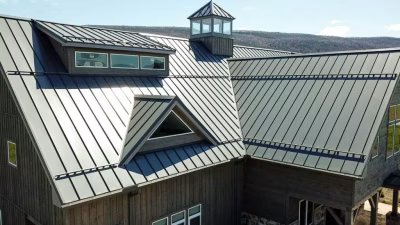
The flashing, penetrations and drainage are just as important as the choice of panel because those details affect how the roof performs. The team can also explain the expected metal roof lifespan and different options, including standing seam metal roofing, so strata councils can compare the system with their existing roof. Before work starts, the scope, materials and maintenance expectations are clearly explained.
As a metal roofing contractor in Vancouver BC, GV Roofs can walk a strata through how their building compares to staying with cedar, based on the roof in front of them.
FAQs
1. Why are some Vancouver stratas switching from cedar to metal?
Some strata councils consider metal when an aging cedar roof requires repeated repairs or replacement. Metal can offer a long service life and non-combustible properties, but the suitability depends on the building, roof assembly, budget and applicable requirements.
2. How long does a metal roof last in the Vancouver climate?
The lifespan varies depending on the metal, the coating, the quality of installation, exposure, and ongoing maintenance. Many systems are designed to last for decades, but a strata should look at the manufacturer’s documentation for the anticipated life span of their particular product rather than some broad estimate.
3. Is a metal roof more expensive than cedar or asphalt?
The up front cost is usually higher due to materials, deck condition and complexity of the project. A full cost comparison must go beyond the initial invoice as the long-term cost is determined by how many replacement cycles and repairs the roof can avoid over its working life.
4. Can I put a metal roof over an existing roof?
It depends on the condition of the existing roof, the structural and code requirements of the building, and the installation instructions of the manufacturer. You often have to remove the old roof first. Before deciding whether an overlay is appropriate, the contractor should evaluate the existing assembly.
GV Roofs is fully insured and WorkSafeBC-compliant.

 4.9
4.9
 5.0
5.0
 4.9
4.9
 5.0
5.0
 4.7
4.7