


What Strata Councils Should Know Before a Roof Replacement in Vancouver
29, Jul 2026
A strata roof replacement in Vancouver is a governance process, not a private purchase. It involves depreciation reports, contingency reserve fund contributions, owner votes, and sometimes a special levy. The approval process can take several months from first estimate to signed contract. GoodVans Roofing is fully insured, WorkSafeBC-compliant, and installs CertainTeed SELECT ShingleMaster™ and Malarkey Emerald Pro Warranty roofing systems on strata buildings and townhouse complexes throughout Vancouver.
Replacing a roof on a strata property in Vancouver rarely moves at the pace a single homeowner is used to. Multiple owners, a council that has to answer to all of them, and provincial rules around reserve funding all shape the timeline before a contractor ever picks up a tool. If you don't know how to make your strata roofing in Vancouver process easy and hassle-free, here we help you out. This post talks about what strata councils should know before a roof replacement in Vancouver.
Why is Strata Roofing Different from Single-Home Roofing?
Strata roofing in Vancouver is more complex than roofing a single home because it often covers multiple buildings and serves many property owners. They require long approvals, unlike single-home roofing. Strata roofing is not like single home roofing. There can be dozens of owners, council approval, and owner notices, and decisions are not in one hand. A single-family roof replacement is a private decision. The owner gets a quote, picks a contractor, and signs. While a strata roof replacement is a governance process. For roof installation, repair, or maintenance, a vote is taken at a general meeting before the contract is signed. A single-family roof replacement is a private decision. On the other hand, strata roofing in Vancouver is a governance process.
How Depreciation Reports Affect Roof Planning in BC
Better roof planning helps owners avoid facing unexpected and large expenses. It spreads expenses over time through regular contributions to a reserve fund. Many strata corporations in British Columbia are required to obtain and regularly update depreciation reports under the Strata Property Act. This report checks the building's condition precisely. It predicts when big parts, like the roof, will need repair or replacement. Members can also know how much money the strata should save for these future costs. The report estimates the roof's remaining useful life based on its age, material, and current condition. This helps strata councils plan ahead instead of waiting for a leak or emergency.
Contingency Reserve Funds and Special Levies
Under the Strata Property Act, strata corporations are generally required to make annual contributions to the Contingency Reserve Fund (CRF). The required amount depends on current legislation and the strata's financial planning. The strata roofing in Vancouver process includes depreciation reports, typically models several funding scenarios, and identifies the likelihood of needing a special levy. depreciation reports, typically models several funding scenarios, and flags whether a special levy is likely to be needed.
In many cases, approving a special levy requires a three-quarter vote of eligible owners under the Strata Property Act, so councils that plan ahead using the depreciation report's timeline avoid scrambling for an emergency vote after a leak forces the issue.
Torch-On SBS, EPDM, and Asphalt for Townhouse Complexes
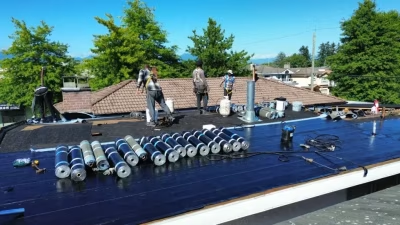
Torch-on SBS membrane is a common choice for flat and low-slope strata roofs because it is fully adhered, seam-welded, and holds up well against standing water. That is a real concern on Vancouver's low-slope condo and apartment roofs.
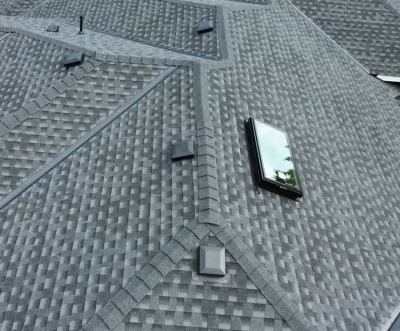
EPDM rubber membrane is another option, often chosen for its flexibility and lifespan on larger flat sections. For townhouse roofing Vancouver, BC, projects with pitched roofs, asphalt shingles remain the standard. That offers a lower upfront cost and easier phased replacement across multiple townhouse units without disrupting the whole complex at once.
How to Reduce Disruption for Owners During a Roof Project
You already know that roof installation, repair or maintenance means noise and temporary parking changes. You even have to use scaffolding or lifts near entrances. To reduce owner complaints, you can consider the following:
- Phased Scheduling: An experienced roofing contractor helps minimize noise and disruption by planning the work carefully. They take a section by section approach for townhouses and other strata properties with multiple roof sections. It also keeps the building better protected during the roofing project.
- Clear Timelines Shared in Advance: It gives specific dates for noisy work, not vague windows. This step will ensure you can prepare for noisy work and reduce inconvenience.
- Protected Walkways and Parking Plans: You can keep common access points clear throughout the project. A single point of contact, so owners are not calling five different subcontractors with questions.
Work with a Strata Experienced Roofing Contractor
Not every roofing company is set up to work with a strata council. A strata roofing contractor in Vancouver BC knows how to prepare a quote that lines up with the line items already sitting in your depreciation report, rather than one that forces the council to reconcile two different numbers.
GoodVans Roofing is fully insured and WorkSafeBC-compliant, and we regularly work directly with strata councils and property managers on high-rise condominiums, townhouse complexes, and smaller residential strata buildings across Vancouver. If your council is approaching a roof replacement vote, request a free strata roof assessment and we'll review your roofing requirements alongside your depreciation report.
Learn more about our strata and multi-family roofing services, our torch-on SBS and EPDM roofing systems, or CertainTeed and Malarkey warranty coverage. We also work with strata councils in Burnaby and Coquitlam.
FAQs
How much does a strata roofing in Vancouver cost per unit in BC?
The cost depends on roof size, material, and how many units share the roof. But it is important for councils to treat the depreciation report's cost estimate as the starting point rather than a fixed number, since material and labor pricing shift year to year.
Does our strata need a depreciation report before replacing the roof?
If your strata has five or more lots, BC law already requires a current depreciation report on file. And it should be the reference point for timing and budgeting any roof replacement.
How long does a strata roof project take from vote to completion?
Between the depreciation report review, owner vote, contractor selection, and the physical work itself, most strata roof replacements take several months to plan and complete and longer for larger or phased buildings.
What roofing material is best for a flat strata roof in Vancouver?
Torch-on SBS membrane and EPDM rubber are the two most common choices for flat and low-slope strata roofs, largely because both perform well against the standing water that's common on Vancouver's low-slope buildings.